


Materials · Nautical History · 3 min read
The Turks Head: A Nautical Classic, Reimagined
The traditional Turks Head had to be cut off. Here’s how we rethought a New England summer classic with a 316L stainless steel clasp, a refined braid and a better fit.

The traditional Turks Head bracelet had one drawback. When it was time to take it off, you usually had to cut it off. We thought there was a better way.
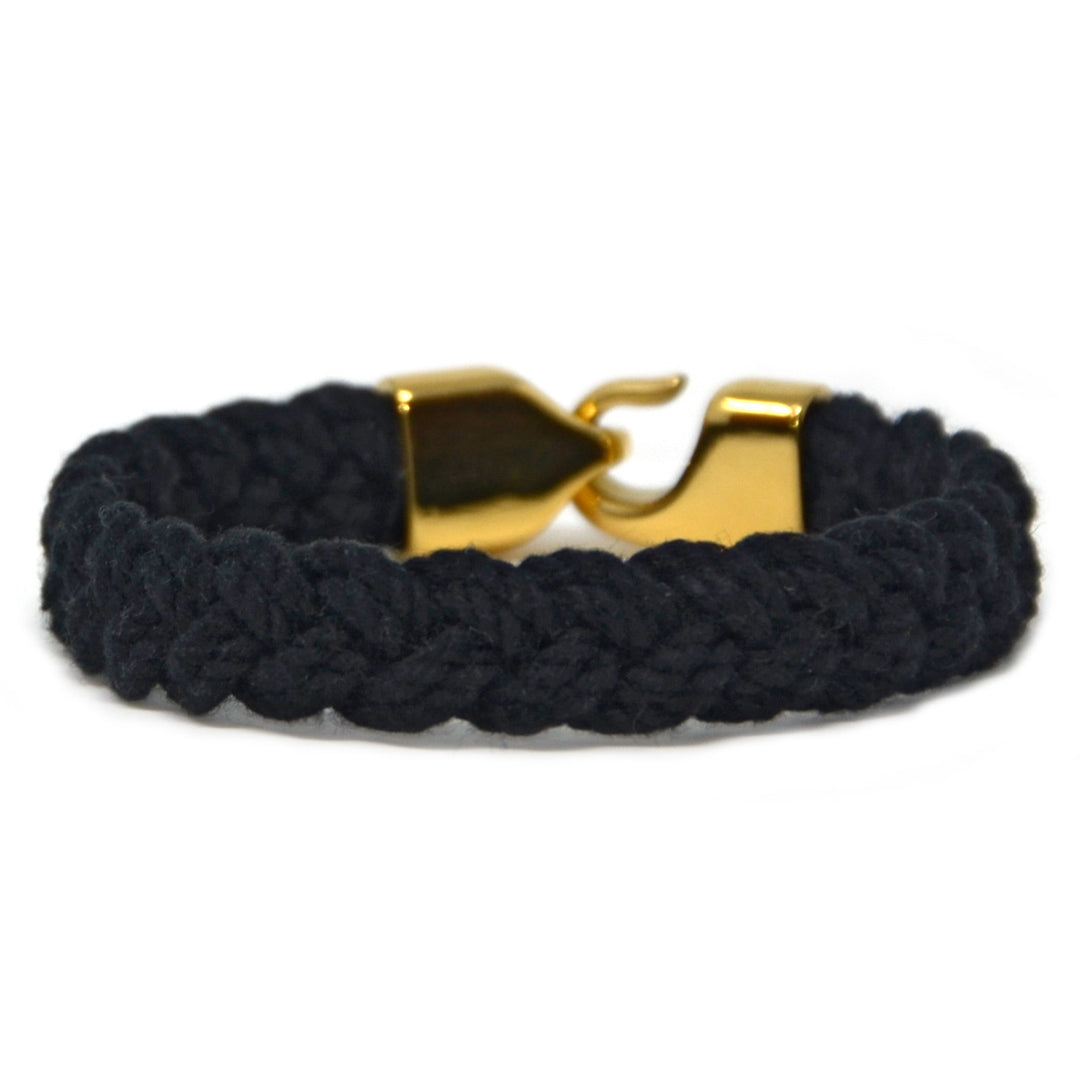
Lemon & Line began in 2010 with our original square-knot bracelet. When we turned to the Turks Head, the goal was the same: rethink a classic without losing what made it special. The result is a more streamlined Turks Head, finished with a 316L stainless steel clasp, a refined braid and a fit designed to feel right on the wrist.
The design moved forward.
A knot with a place aboard.
The Turks Head is a family of decorative knots made by weaving line into an interlaced pattern. Its name comes from its resemblance to a wrapped turban, and it belongs to the long tradition of ornamental ropework.
But this knot isn’t simply decoration. Worked around a rail, a handle or a spar, a Turks Head adds grip and protection. One familiar example sits on a ship’s wheel: the Turks Head tied on the king spoke, the spoke that stands upright when the rudder is centered. It lets the helmsman find that spoke quickly, by sight or by feel.
It’s a good example of something we appreciate about traditional seamanship: practical things often become beautiful through the way they’re made.
The bracelet you remember.
For anyone who grew up around New England waters, the Turks Head bracelet is a familiar sight. It was a summer staple, worn on boats, at the beach and everywhere in between. The color faded, the braid softened and the bracelet took on the character of the season.
Our founder, David, wore one as a boy on Cuttyhunk.

Eventually, though, every one of them reached the end of its life. Some were tied directly onto the wrist. Others, like the one David wore, shrank tight around the wrist once they got wet. Either way, taking one off usually meant reaching for a pair of scissors.
That was the part we wanted to change.
Small changes that made the difference.
We didn’t set out to reinvent the Turks Head knot. We set out to rethink the bracelet around it.
First, we added a clasp. A 316L stainless steel clasp means the bracelet comes off and goes back on without cutting anything. A simple change, and the one that makes it practical for everyday wear.
Then we refined the profile. We kept the recognizable woven pattern but built it into a cleaner, more streamlined braid, without the bulk of the old summer bracelet.
Finally, we considered the fit. Instead of being tied on or shrunk to fit, every Turks Head comes in sizes XS to XL, designed to sit snug and comfortable on the wrist. Find your size.
These decisions work together. The clasp isn’t hardware added to a knot as an afterthought. It’s what turns the Turks Head into a bracelet you can wear, take off and wear again.

Materials matter.
Each Turks Head is handcrafted in our Newport, Rhode Island studio from custom hand-dyed, marine-grade cotton line and finished with 316L stainless steel, a grade chosen for its resistance to corrosion in saltwater.
The braid gives the bracelet its character. The clasp makes it practical. The proportions bring the two together.
None of these details is loud on its own. That’s intentional. The aim is a bracelet that feels at home on the water and just as right back ashore.
You’ll find that idea across our Turks Head collection, from Turks Head Oyster, one of our best sellers, to the Limited Edition Turks Head with its gold-plated clasp.

Tradition, without standing still.
Good design doesn’t always mean starting from scratch. Sometimes it means recognizing what people already love, understanding what could work better and making the smallest changes that matter most.
For us, the Turks Head was exactly that. Keep the familiar woven pattern. Refine the braid and the fit. Add a clasp, so it becomes a bracelet you keep season after season instead of one you cut off at the end of summer.
The sea has always been hard on the things we bring to it. We believe the things worth keeping should be built accordingly.
Built by hand.
Born by the sea. Built by hand.
The original marine-grade rope bracelet, handcrafted in Newport for salt, sun and sea.
More from the Journal
Nautical History · Newport · 7 min read
The 12-Metre Era: The America’s Cup Years That Defined Newport
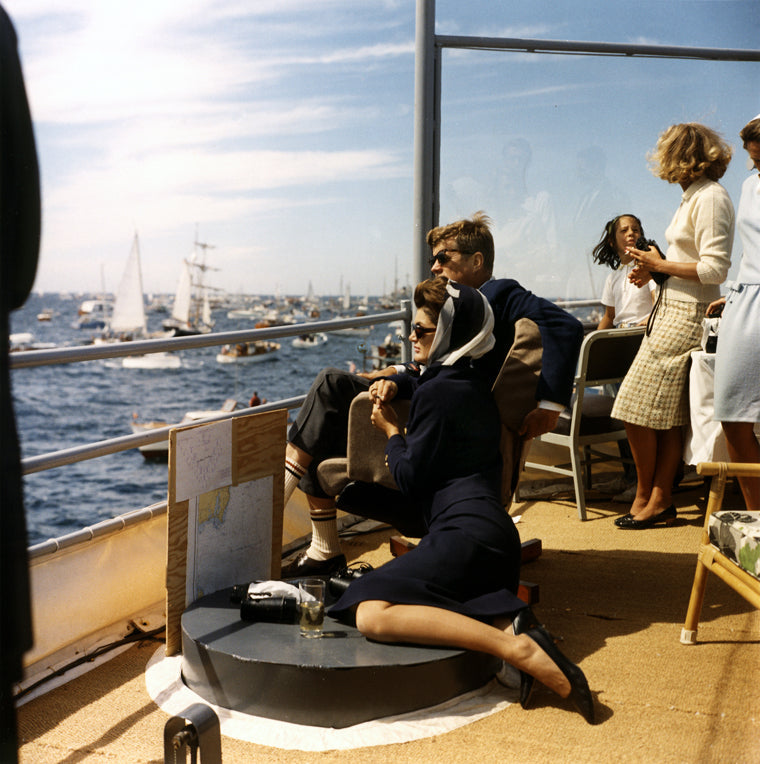
From Kennedy watching the races off Newport to the boats still sailing Narragansett Bay today, the 12-Metre era left a mark on Newport that never really went away.
READ THE STORY →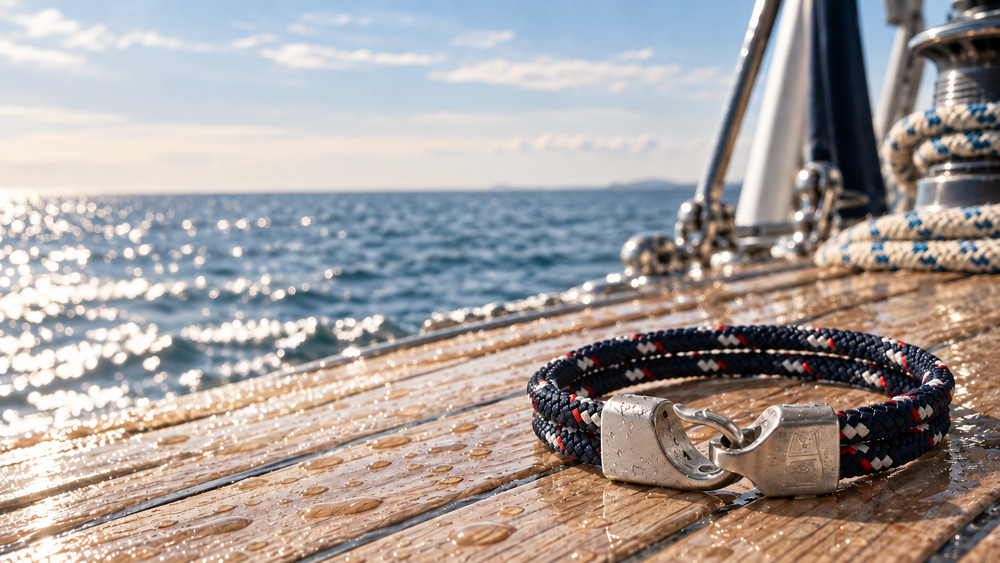
Materials · Seamanship · 2 min read
What “Marine-Grade” Should Actually Mean
The sea has a way of exposing shortcuts. Here’s what we mean when we say marine-grade, from 316L stainless steel to the line and the way it’s built.
READ THE STORY →