


Nautical History · Seamanship · 3 min read
Why Do Sailors Wear Rope Bracelets?
There’s a fair amount of rope on a boat. Some of it eventually finds its way onto a wrist. Tradition, a connection to the water, or simply a good-looking piece of kit? Probably a little of each.
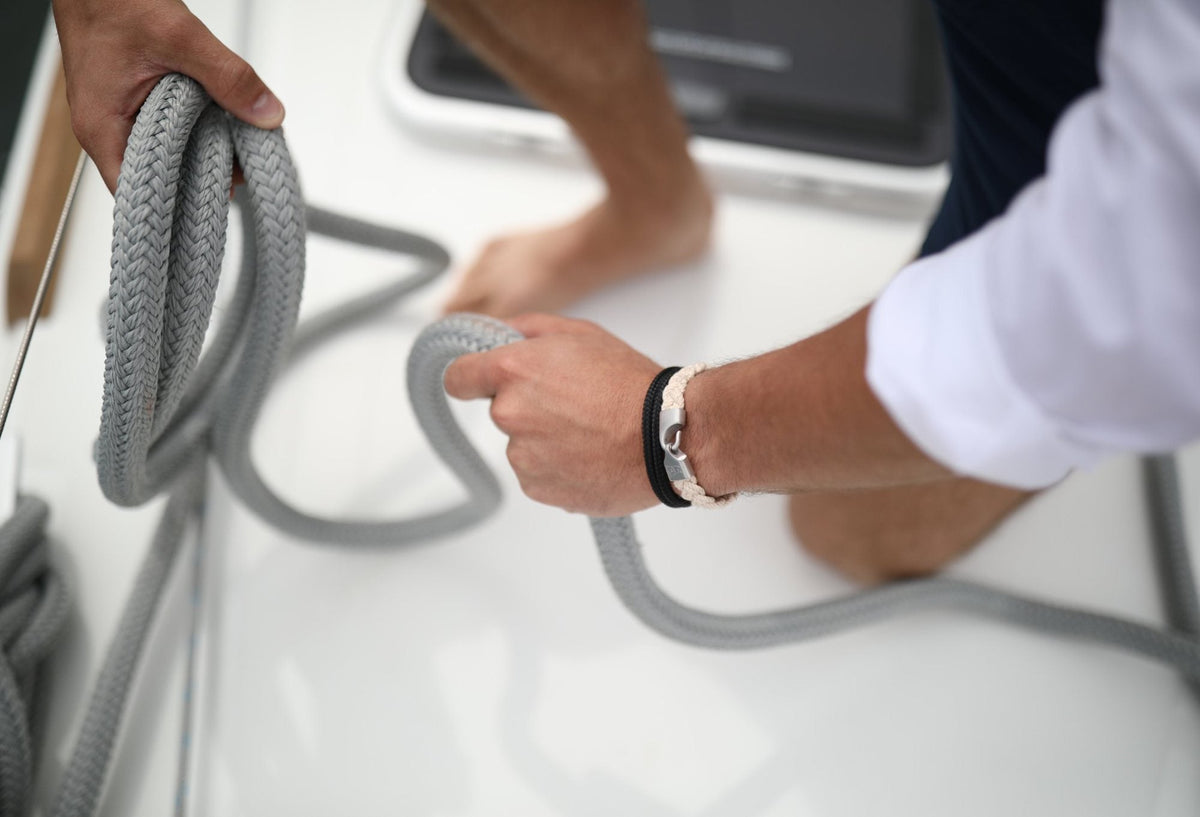
There’s a fair amount of rope on a boat. Some of it eventually finds its way onto a wrist.
Ask a sailor what that length of rope on deck is called and you may get a correction. Aboard a boat, it’s generally a line. There are dock lines, halyards, sheets and plenty of other lines, each with a job to do.
Take that same material off the boat, tie it around your wrist, and suddenly we’re back to calling it a rope bracelet.
Fair enough.
So why do sailors wear them? Is it tradition, a connection to the water, or simply a good-looking piece of kit? Probably a little of each.
Sailors have a thing for rope
Spend enough time around boats and you develop an appreciation for the things that work. Lines, knots, hardware and gear aren’t there for decoration. They have a purpose, and you learn pretty quickly which ones you can count on.
Rope is part of that world. It’s familiar, practical and unmistakably nautical. A bracelet made from it carries a little of that character ashore.
It doesn’t need to look like something pulled off a working boat. In fact, it’s probably better if it doesn’t. The appeal is in the material and the construction, not in trying to turn your wrist into a piece of rigging.
There’s a reason knots matter
Ask any sailor and they’ll tell you that knowing a few knots is useful. Knowing the right knot for the job is even better.
A bowline, a clove hitch and a cleat hitch each have their place. They’re learned by doing, and eventually the movements become second nature.
Knotted bracelets borrow from that same visual language. The pattern, the crossings and the way the material comes together are part of what makes them interesting. There’s a certain satisfaction in something well made, especially when its construction is more than just decoration.
It’s not always about sailing

Not everyone wearing a nautical bracelet owns a boat, and that’s perfectly fine.
Maybe you grew up around the water. Maybe you spent summers in a harbor town, learned to sail as a kid, or have a particular stretch of coast you keep coming back to. Maybe you just like the look of something made from rope.
There’s no membership card required.
Some things remind us of where we’ve been, the people we’ve spent time with, or the places we’d rather be. A bracelet can do that without needing to explain itself.
A little nautical, without overdoing it
We tend to prefer the quieter end of things. Good materials, thoughtful construction and hardware that belongs there. Something you can wear every day, whether you’re heading out on the water or just heading out the door.
At Lemon & Line, we make our bracelets in Newport, Rhode Island, using custom-made line and 316L stainless steel hardware. They’re made by hand, with a straightforward idea behind them: take something familiar to life on the water and make it into something worth wearing.
So, why the rope bracelet?
Maybe it’s the connection to sailing. Maybe it’s the knot, the material, or a memory that comes with it. Maybe it just looks right.
Whatever the reason, you don’t have to spend your weekends on a boat to appreciate a well-made nautical piece.
And if a sailor corrects you and calls it a line, let them. They’re probably right.
Just don’t ask us to start calling them line bracelets.
Born by the sea.
Built by hand.
— Lemon & Line
Born by the sea. Built by hand.
The original marine-grade rope bracelet, handcrafted in Newport for salt, sun and sea.
More from the Journal

Materials · Nautical History · 3 min read
The Turks Head: A Nautical Classic, Reimagined
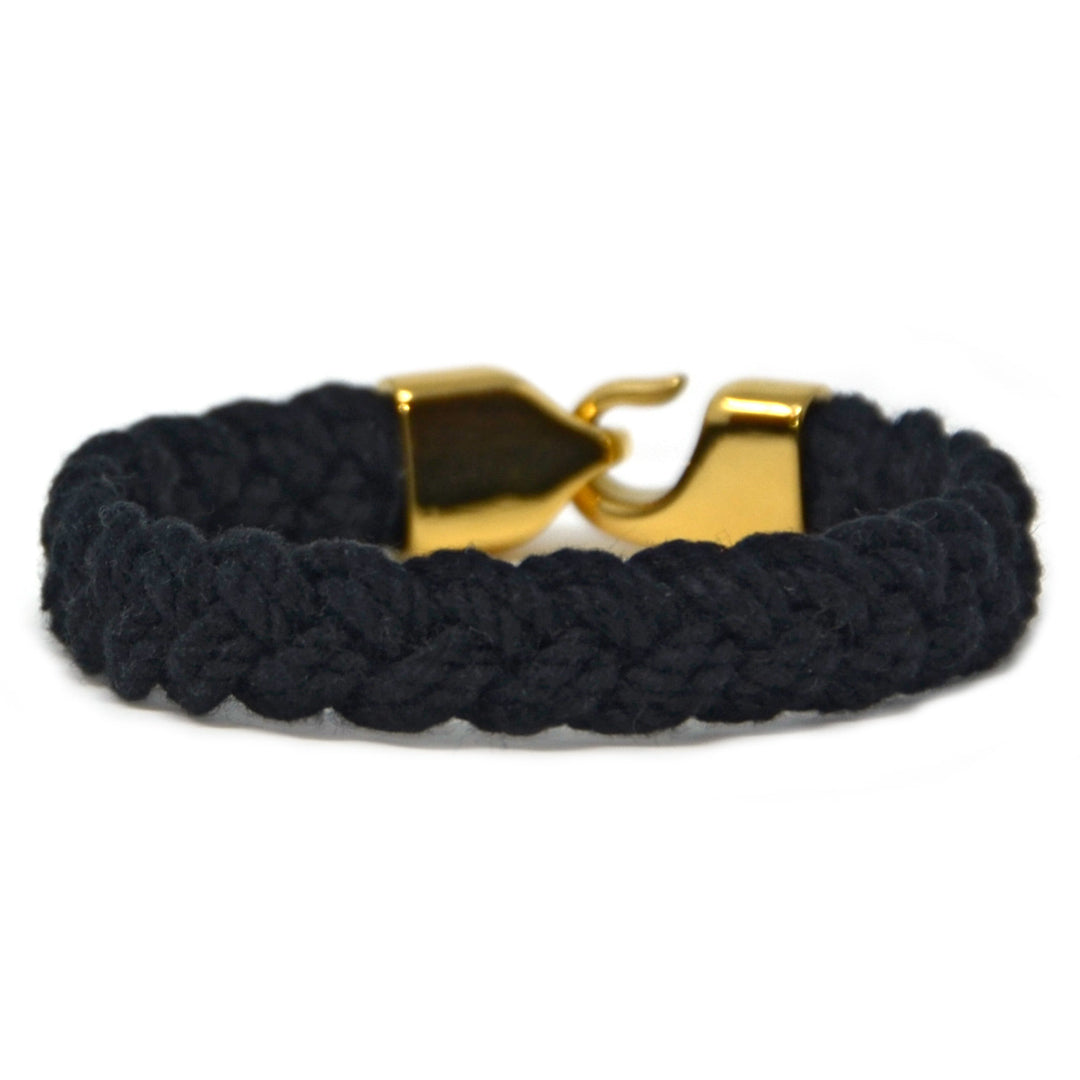
The traditional Turks Head had to be cut off. Here’s how we rethought a New England summer classic with a 316L stainless steel clasp, a refined braid and a better fit.
READ THE STORY →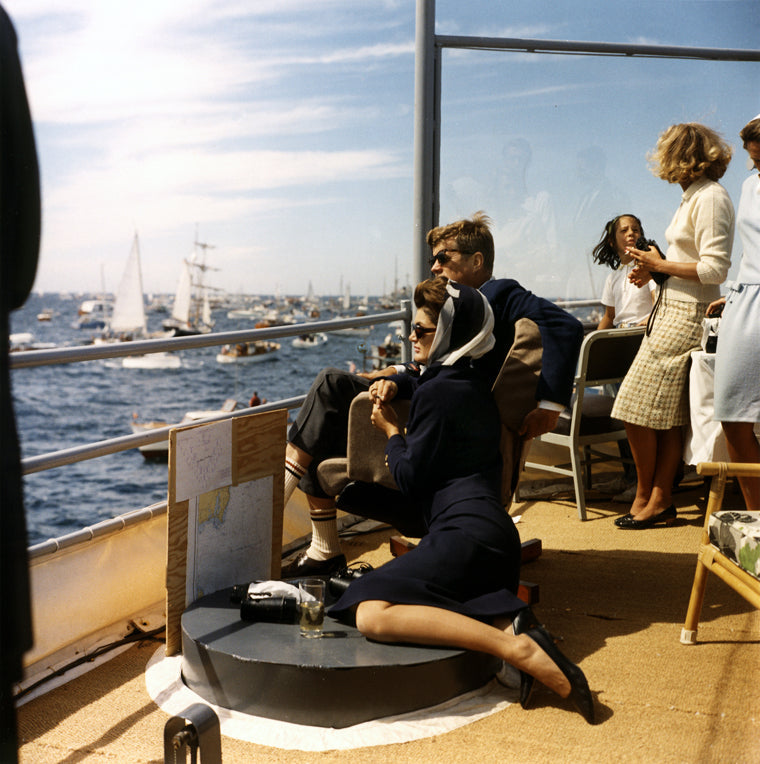
Nautical History · Newport · 7 min read
The 12-Metre Era: The America’s Cup Years That Defined Newport
From Kennedy watching the races off Newport to the boats still sailing Narragansett Bay today, the 12-Metre era left a mark on Newport that never really went away.
READ THE STORY →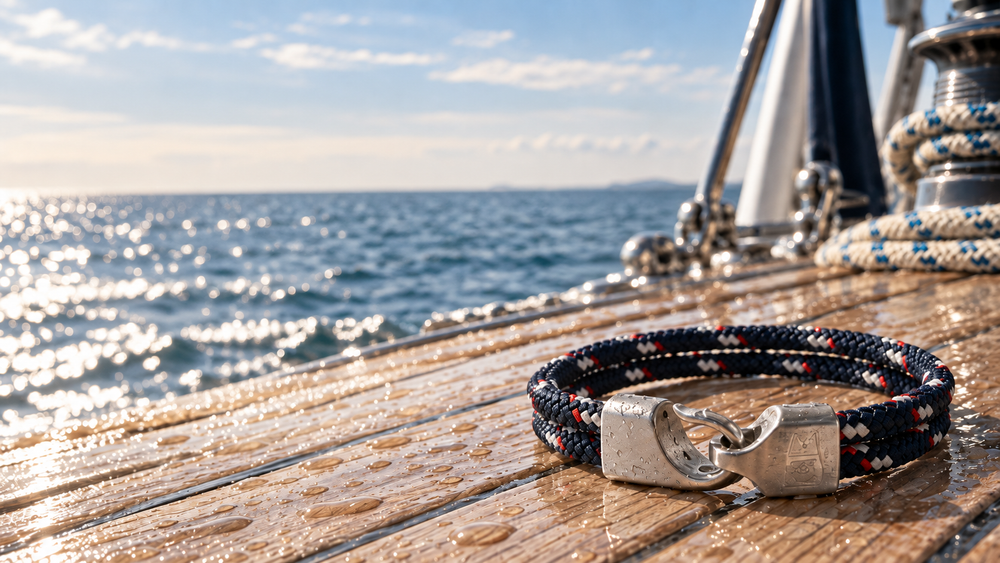
Materials · Seamanship · 2 min read
What “Marine-Grade” Should Actually Mean
The sea has a way of exposing shortcuts. Here’s what we mean when we say marine-grade, from 316L stainless steel to the line and the way it’s built.
READ THE STORY →